Picture a wedding morning in an English village. The dress hangs on the wardrobe door. The car is due at eleven. And somewhere between the hairpins and the flowers, an aunt asks the question every bride has heard.
“Have you got your something borrowed?”
Out comes the wedding rhyme, recited like a spell. Something old, something new, something borrowed, something blue. Most families can finish it without thinking. Almost none can tell you where it came from.
The honest answer is stranger than the story usually told at the reception.
What the Wedding Rhyme Means
The rhyme is a checklist for the bride’s outfit. She should wear one thing that is old, one that is new, one borrowed from somebody else, and one that is blue.
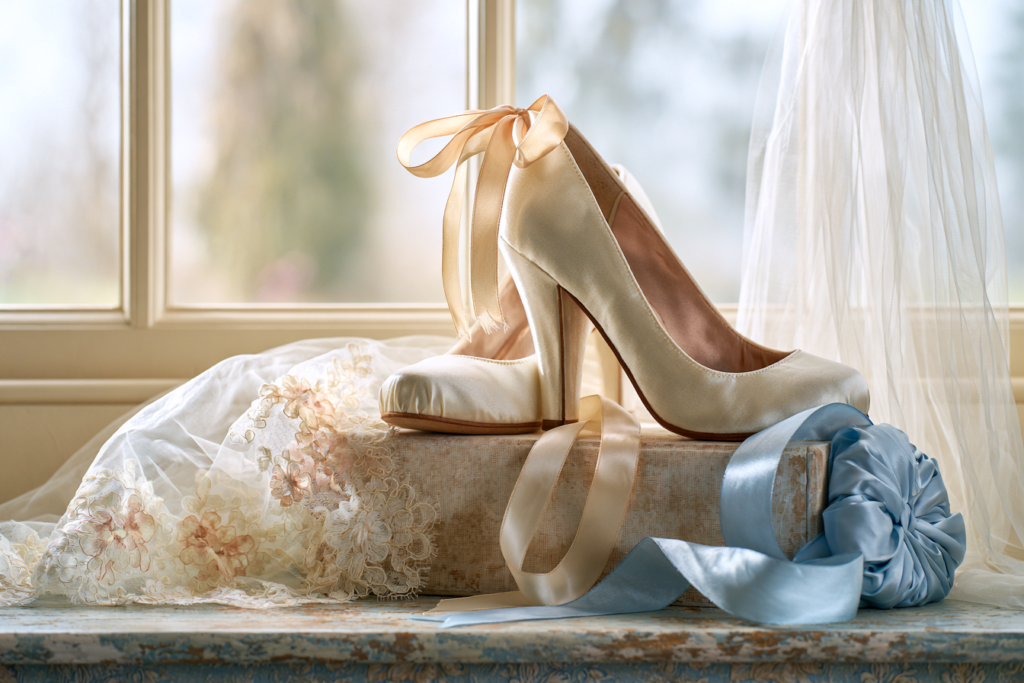
Many versions add a final line: and a silver sixpence in her shoe. Tradition is oddly particular about that part. The coin belongs in the left shoe.
Each item is said to bring the marriage luck. Miss one out, and, well, nobody quite says what happens. That vagueness is part of its charm.
Where It May Have Come From
Here’s the surprise. For a custom everyone calls ancient, the written trail is short.
The earliest version found in print appeared in 1871, in a piece in St James’ Magazine about the worries of a bride to be. And it only had three items: something new, something borrowed, something blue.
The full rhyme, with “something old” included, first turns up in a newspaper report from 1876, describing a Lancashire wedding. The report says the bride dressed this way “according to ancient custom.”
That phrase should make us pause. In its very first recorded appearance, the rhyme was already being called ancient. Nobody checked. Victorians loved an ancient custom, and calling something ancient made it so.
There are hints of older roots. The folklorist William Henderson recorded a “something borrowed” wedding belief in the north of England in 1866. So pieces of the rhyme were floating about before somebody stitched them together. But the written evidence begins in the 1860s and 1870s, not in some misty medieval past. Anything earlier is guesswork.
The Folklore Behind It
The original meanings are earthier than the versions told today.
A folklore collection published in 1898 spells them out. The old item and the blue item had one job: to baffle the Evil Eye. A jealous glance at a bride was believed to carry real power, and the wrong sort of look could curse her with childlessness.
The borrowed item is the strangest of all. Ideally, it was not a necklace or a handkerchief. It was an undergarment, borrowed from a woman who already had children. The idea was that her good fortune, her fertility, would pass to the bride along with the garment.
The sixpence came later, a Victorian addition promising prosperity and one more layer of protection.
The rhyme was not the same everywhere, either. In Leicestershire, brides made do without the “something old.” And in some parts of the country, folklore said the opposite about blue: it was thought unlucky at a wedding altogether.
Truth Or Myth
So is the rhyme genuine folklore? Yes. It’s real, recorded custom, and Victorian brides clearly believed in its protection.
Is it ancient? The evidence says no. The paper trail begins around 150 years ago. The “ancient custom” label was attached from the start, but a label is not a pedigree.
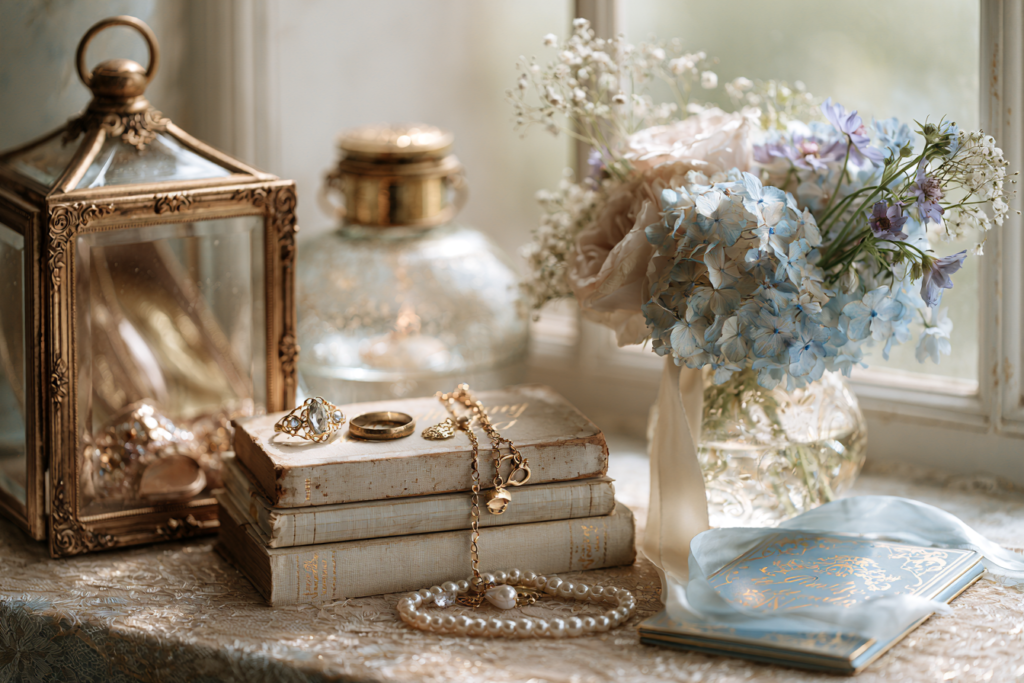
The modern meanings have drifted too. Today you’ll read that blue stands for purity and fidelity, and that borrowing something means borrowing a little happiness from a happily married friend. Those are gentle, modern glosses. The recorded Victorian meanings were about warding off the Evil Eye and passing on fertility through borrowed linen. The rhyme kept its words and quietly swapped its meanings.
Why It Survived
The rhyme lasted because it gives people something to do.
A wedding morning is nervous work. The rhyme hands out small, kind jobs. A grandmother offers her brooch. A friend lends a bracelet, a mother sews a scrap of blue ribbon inside a hem, and suddenly half the family is stitched into the outfit.
It travelled well, too. By 1905 the rhyme had crossed the Atlantic and was appearing in American fiction. It’s now recited at weddings that have never seen a sixpence.
And perhaps it survived because it asks so little. Four small things. It costs nothing and needs no explaining. Just a quiet bit of luck, tucked into a shoe.
Lucky Wedding Rhyme!
The next time you hear the rhyme at a wedding, you’ll know its secret. It’s not a relic of the medieval church or an echo of Rome. It’s a Victorian good luck charm, barely 150 years old in writing, with roots in the fear of envious eyes and the borrowing of luck from luckier women.
Somehow, that makes it better. This is a custom young enough that families are still shaping it, one wedding at a time.
What was your something borrowed? A ring? A handkerchief with a history? Someone in your family will remember. Ask them.