There are few sights more beautiful than a red sky at sunset.
You see it while drawing the curtains, walking the dog along a lane, or standing at the kitchen window with a cup of tea. The clouds turn rose, copper, crimson, almost blood red. And somewhere in the back of the mind, without any effort, the old saying rises.

Red sky at night, shepherd’s delight. Red sky in the morning, shepherd’s warning.
It feels like the sort of phrase that belongs to a cottage doorway, a lambing field, or a harbour wall. Simple enough for a child to remember, yet old enough to support the weight of generations. Before weather apps, rain radar, and television forecasts, people looked up. The sky wasn’t just scenery. It served as a warning, a promise, and sometimes a comfort.
At its plainest, the saying is a short forecast. A red sky at sunset points to fair, settled weather: calm enough for flocks, fields, and ordinary outdoor work. A red sky during the morning is a warning, with rain or wind likely on its way.
Coastal communities swapped the shepherd for a sailor. “Red sky at night, sailor’s delight” is often the phrase along the coast, and the meaning still works. Only the figure at the centre changes. A shepherd caught out in bad weather risked his lambs or newly shorn flock. A sailor risked rather more. Weather lore was practical. People shaped sayings around the lives they actually lived.

The familiar English rhyme doesn’t have a precise birthdate, but the idea behind it is ancient. Sky colour was being read as a weather sign in Mesopotamia and Babylon. Theophrastus, the Greek philosopher who studied under Aristotle, wrote about reddish skies as weather omens; interestingly, he treated a red sunset as a possible sign of rain, as did a red dawn, suggesting that early interpretations varied widely by place.
Something remarkably similar to the modern rhyme appears in the Gospel of Matthew. It links red evening sky with fair weather, and a red morning with storms. English readers encountered this through Bible translation. The Wycliffe Bible of 1395 used the word “ruddy”, and the image gradually became part of English literary culture. Shakespeare drew on it in Venus and Adonis, connecting the red morning sky with danger for sailors and shepherds alike. By 1670, rural weather wisdom had been gathered into The Shepherd of Banbury’s Rules, attributed to John Claridge, which included related observations about evening red and fiery sunrises. The familiar couplet had already become a centuries-old tradition by then.
The red sky saying sits within a wider world of weather lore that once shaped how rural people understood the year. Many odd things became signs in that time. Strange clouds, rings around the moon, birds flying low, the feel of humidity in the air. You may have heard of some of these. Some were careful observations. Others drifted into superstition. Many sat somewhere in between.
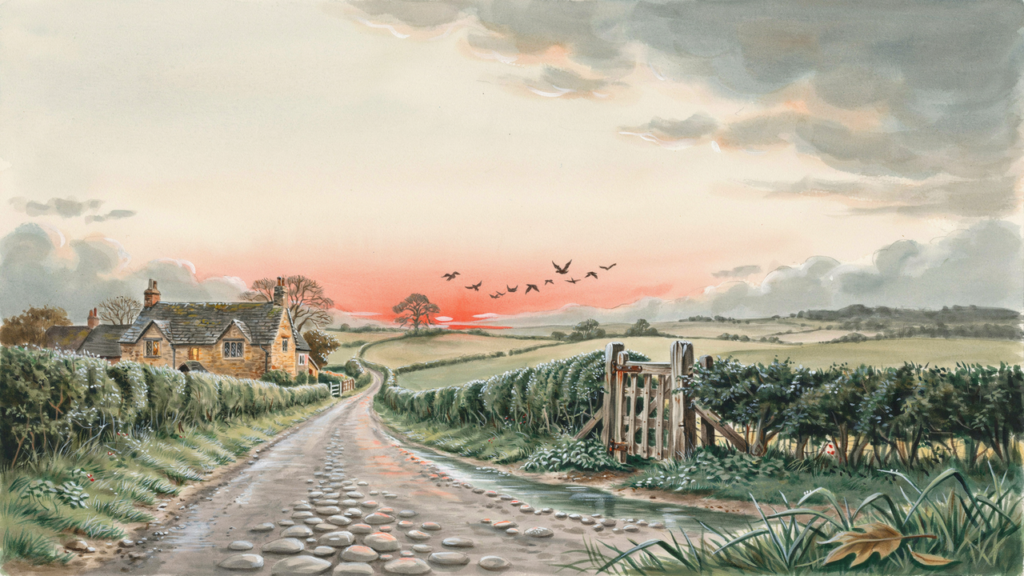
What made the red sky saying particularly durable was how little it required. No tools, no literacy, no particular expertise. Anyone could stand at a gate or a harbour wall and look west at sunset. The rhyme helped too. Night and delight fit so neatly together, as do morning and warning, that the saying almost teaches itself. A shepherd didn’t need to know atmospheric physics. He only needed to remember what generations before him had noticed.
There was also something in the habit of treating the sky as a message. Not in a mystical sense necessarily, though people certainly attached spiritual meanings to weather, but more plainly as something to be read. A red evening sky was reassurance. A red morning sky was caution. The sky talked, and people listened.
Unlike many old wives’ tales, this one has genuine scientific backing, though it comes with real limits.
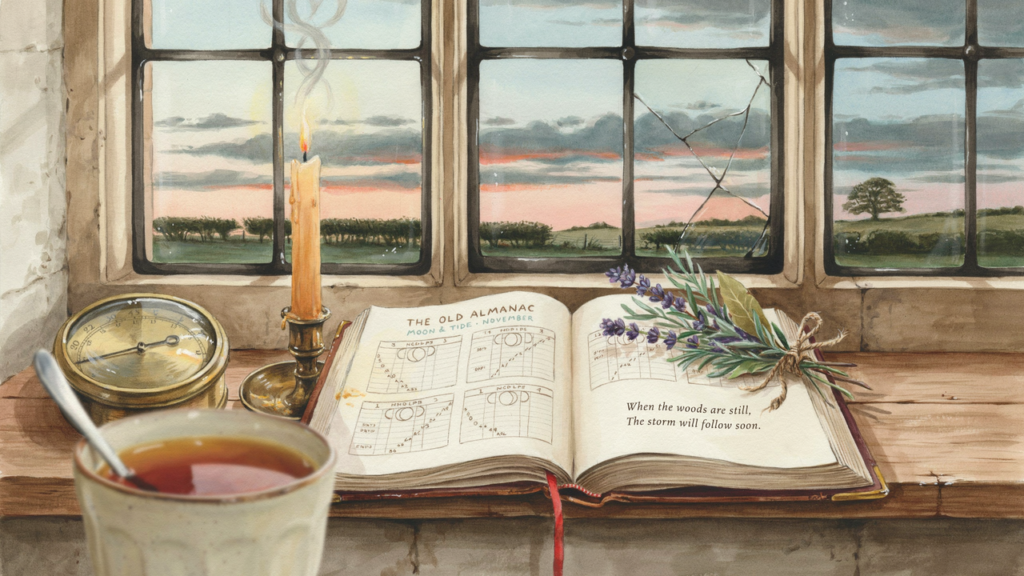
At sunrise and sunset, the sun sits just above the horizon and its light travels through a much thicker stretch of atmosphere before reaching our eyes. The shorter blue wavelengths scatter away, leaving the longer reds and oranges visible. That explains the colour. The weather part depends on something else: how pressure systems and particles actually move.
A vivid red sky often appears when fine particles are in the air in stable, dry conditions. When we have high pressure and settled weather. In Britain and across mid-latitude regions, weather systems tend to travel from west to east. At sunset, we look west; a red western sky can suggest that dry, stable air is approaching. At sunrise, we look east, and a red sky there may mean the settled weather has already moved on, with wetter conditions following from the west.
It is a rule of thumb, not a precise forecast, and it does not hold everywhere. There are some places where local conditions may complicate the picture. Places like India during monsoon season, Australia’s outback, and tropical regions. Even in Britain, a strong Atlantic low can override the pattern. Weather on the west coast of Ireland, battered by systems coming off the ocean, can behave differently to the more settled east of England, where the saying arguably works best. But for a rhyme with no instruments behind it, it holds up rather well.
The saying survived, perhaps, because it is useful, memorable, simple, and beautiful. Many old sayings faded when the customs that gave them meaning disappeared. This one lasted even for people who have never kept sheep or sailed a boat, partly because the rhyme makes it almost impossible to forget, and partly because it seems to work often enough that we overlook the times it doesn’t.
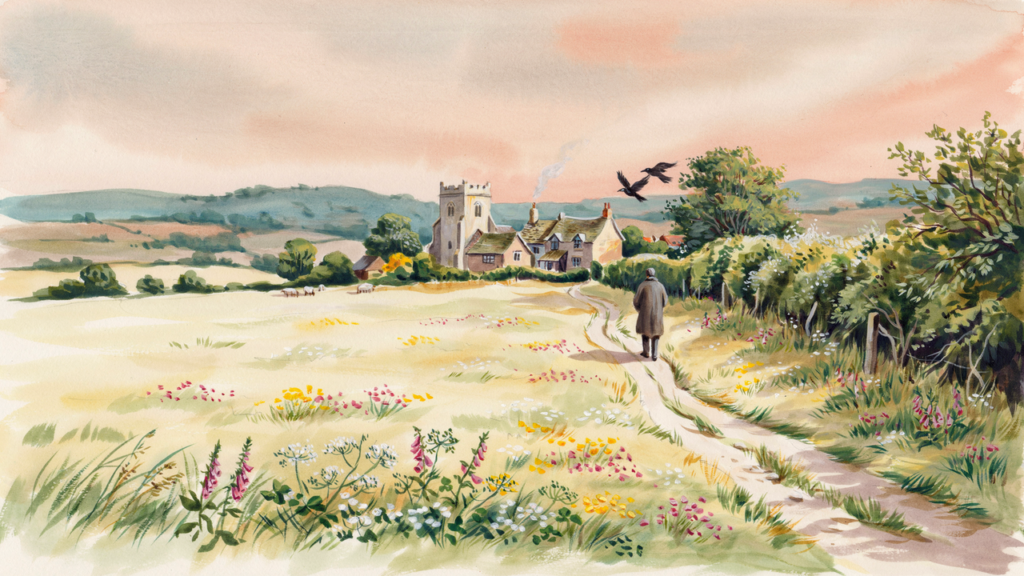
There’s something else too. Looking west at a darkening sky and saying a rhyme feels different from checking a forecast. It puts you, briefly, in a long line of people who looked at the same sky and drew the same conclusion: shepherds, sailors, farmers, people standing at cottage doors with no better instrument than their own eyes. Sometimes they were wrong. Occasionally, they were surprisingly accurate.
So when the clouds flush rose and copper over the rooftops, it’s worth a pause. The old shepherd wasn’t always right. But he was paying attention.
Did your family use the shepherd version, the sailor version, or something else entirely? And has the sky ever actually delivered on its promise?